
Pickett’s Integrated Apple Orchards
Silent SpringThis flow traces A. D. Pickett’s shift from escalating sprays to a program that used natural enemies and limited chemicals.
increasing Bearing strength in each event
 decreasing
Bearing strength in each eventdecreasingThe Spray Program Disappoints

Persistent Orchard Pests
An Expected Solution
Growers and entomologists had expected insecticides to solve orchard problems if applied according to recommendations. In practice, pests persisted despite new chemicals and better equipment.
A Crisis Repeats
Each added treatment failed to deliver lasting control. The repeated cycle made clear to A. D. Pickett that the problem involved the orchard community, not merely the toxicity of a product.
DDT Brings Mites

One Pest Replaced by Another
A Promised Breakthrough
DDT was expected to end the recurring codling moth problem. Instead, its use was followed by a major increase in mites.
A New Diagnosis
Pickett described the repeated movement from one crisis to another. The experience strengthened his view that killing broadly could remove natural checks and make orchards less stable.
Natural Enemies Become Allies

An Orchard Reconsidered
Biological Restraint
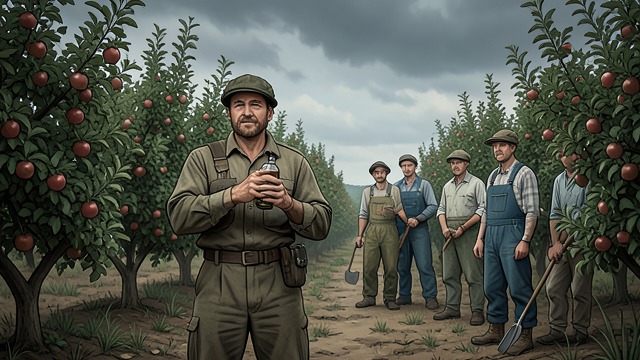
Pickett designed a program that relied on natural predators and parasites wherever possible. When chemicals were necessary, he used minimal doses and timed applications to spare beneficial species.
Knowledge Shapes Timing
Even the timing of treatment mattered: a pest-control spray could be applied when an important predator was still protected in an earlier life stage. Ecological knowledge became a practical management tool.
A Lower-Toxicity Toolkit
Selective Choices
Reduced Reliance
Pickett favored materials such as ryania and nicotine sulphate and used very weak concentrations of some synthetic insecticides in limited situations. His objective was to preserve the orchard’s natural controls.
Research Continues
He hoped further investigation would replace even these remaining chemicals with safer options. The program treated insect control as an evolving biological practice rather than a contest to find ever more powerful poisons.
Results Without Ecological Ruin
A Working Alternative
Crop and Cost
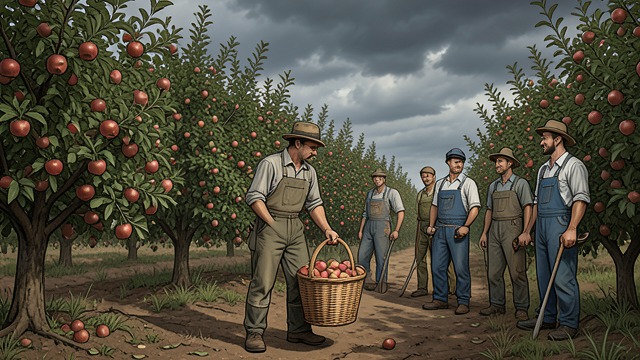
Nova Scotia growers following Pickett’s approach produced comparable yields and high-grade fruit while spending substantially less on insecticides than intensive spray programs elsewhere.
A Different Measure of Success
The program’s value lay in maintaining natural balance while meeting agricultural needs. Pickett’s work embodied Carson’s case that restraint and biological understanding could be both effective and economical.
Before the adoption of DDT in Nova Scotia
After DDT entered the orchard program
As Pickett’s revised program developed
During the mature integrated program
By the time Carson describes the program
